
- MOQ 1 — a single part, no tooling charge
- Prototypes run on the same machines as production
- First-article inspection on a one-off, not just on production
- 3 / 7 / 30-day lead-time ladder with the assumptions stated
Prototype versus production: what actually changes
Four things change between prototype and production: fixturing, toolpath conservatism, inspection depth, and unit price. What must not change is the process. A prototype cut on a hobby mill and a production part cut on a 5-axis machine are two different products wearing the same drawing number.
Why cutting beats tooling at this stage

At prototype stage you are paying for iteration, not for parts. Machining changes a feature by editing a toolpath; a mold or a die changes it by buying a new tool. Until the design is frozen, subtractive manufacturing is the cheapest way to learn, and the only way that gives you real material properties to test.
First-article inspection on a one-off
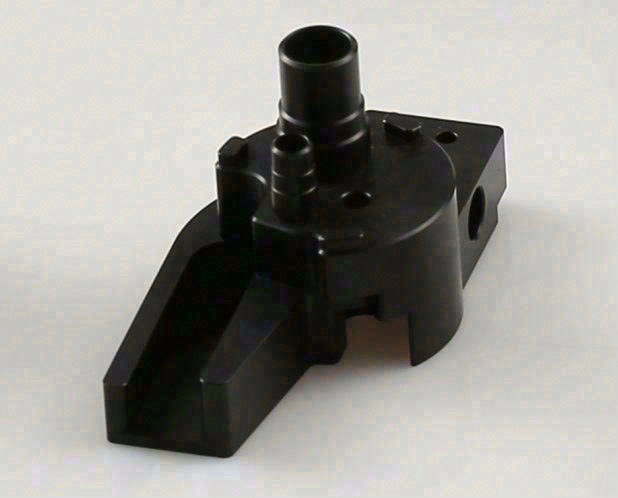
One part still gets an FAI. The report you receive on a prototype becomes the baseline for production climb — dimensional data tied to the critical features, so when the production lot measures differently, you can see exactly where, and why. Skip the FAI at prototype and you are flying production blind.
The bridge to production
Using the same shop for prototype and production removes the most expensive failure mode: a design validated on one process and then re-qualified on another. Our DFM notes arrive with the prototype quote, written from a production process, so the design is already production-shaped before you approve it.
Lead times for one, ten, one hundred
Three days for a simple part in stocked material; seven days for a standard machined part; thirty days when a part needs special material or a multi-step finish. The number always comes with its assumptions, so the date means something you can schedule against.
What to send for an accurate prototype quote
3D model plus 2D drawing with GD&T, the material, how many prototypes and how many production, any surface finish, and which features are critical. With that, you get DFM notes and an itemised quote, and the prototype becomes a plan, not a gamble.
Can a prototype hold production tolerances?
Yes — we cut prototypes on production machines, so ±0.003 mm milling and ±0.002 mm turning apply to the first part the same as the ten-thousandth.
Is there a minimum order?
No — one part. Prototypes run through the same process as production, so MOQ 1 is real, not a loss-leader.
Send the model and get DFM notes with the prototype quote, not after the parts arrive.
Send a 3D file to [email protected] · +86 13126536955
Standards referenced on this page
- ISO 9001 — Quality management systems — Requirements
- ASTM E8/E8M-21 — Standard Test Methods for Tension Testing of Metallic Materials