
Medical device components are machined on the same machines as any other precision part; what changes is the burden of proof around them. A bracket that ends up in a surgical instrument or a therapy device is judged by its material certificate, its measured values, and its traceability as much as by its geometry, and a buyer sourcing that work from a CNC machining shop is really buying a record chain as much as a part. This guide walks the medical machining decision in the order a buyer meets it: which materials to specify and in what condition, what tolerance the process can honestly hold, how surface finish and treatment are matched to features, and what documentation makes a lot auditable.
What changes when a machined part carries a medical use case?
The machine does not care whether the part ends up in an instrument tray or a conveyor line, but the specification and the record do. A medical component is expected to behave predictably in a clinical environment — the material must be the grade the drawing names, the surfaces must be clean and free of the contamination machining can leave, and the lot must trace back to a specific heat of material. The buyer's job shifts from "make this shape" to "prove this shape, this material, and this process," and that shift lands on the drawing, the incoming material check, and the shipping package.
The practical consequence is that medical sourcing rewards shops that treat records as deliverables. When you qualify a machining shop for medical work, look at how it answers questions about material verification, dimensional inspection, and lot traceability, not how it describes its machines. A shop that can produce the incoming material record, the CMM report, and the certificate of conformity for a past lot is telling you what an audit will find; one that talks in adjectives is warning you. The same discipline that runs a clean record is the discipline that runs a clean lot.
Which materials dominate medical machining drawings, and what condition should each carry?
Medical drawings concentrate on a short list of families, and each must be specified with its condition so the certificate can be checked. The table below is the practical map a buyer should hold against a medical machining quote.
| Material | Typical medical parts | Specify the condition | What to verify |
|---|---|---|---|
| 316 / 316L stainless | Implantable and corrosion-critical hardware, surgical instruments | Annealed, low-carbon confirmed | L-grade confirmation, mill certificate, passivation |
| 17-4PH stainless | High-strength instruments and drivers | Age condition (H900–H1150) | Age condition, heat-treat certificate, hardness |
| Ti-6Al-4V (Grade 5 / ELI) | Lightweight structural parts, trauma hardware | Annealed bar or billet, heat traceable | Heat number, condition, straightness |
| 6061 / 7075 aluminum | Housings, instrument frames, drill guides | -T6 or -T651; 7075 for strength | Temper, anodize class if specified |
| PEEK and other polymers | Single-use and reusable components, MRI-safe parts | Medical grade where the application demands it | Grade certificate, sterilization compatibility |
Three rules follow. First, prototype in the production grade: a 316L or titanium part prototyped in a free-machining stand-in tells you nothing about how the production material will machine or finish. Second, name the condition with the grade, because the certificate and the machining plan both depend on it — 17-4PH machined in the annealed state and aged afterward is a different part from the same alloy delivered as-is. Third, ask how the shop verifies incoming stock against the certificate, because a mixed or mislabeled lot is the most expensive defect in medical machining.
What tolerance can medical CNC machining hold, and where does grinding belong?
The capability bands are the same as anywhere, because a part does not change physics by being medical. Milling and turning hold fit and alignment features to ±0.003 mm, with process capability of Cpk 1.67 or higher demonstrated on key characteristics, and precision grinding reaches ±0.002 mm. The tight band belongs on the features that control function — the bore that carries a bearing, the sealing face, the locating diameter — while the general envelope runs at a block tolerance that costs a fraction as much to produce and inspect.
When a feature genuinely needs better than milling can hold, the honest answer is a grinding operation on that feature, not a tighter note on a milling drawing. A journal that must be round in the low microns, a seal seat whose finish the mill cannot deliver, a fit that demands cylindricity beyond turning — each is a grinding job, and the quote should route it there and price it separately. Ask the shop which features it would route to grinding before you accept a quote that holds them on the mill, and put the process change in the record, because the feature's tolerance claim is only as good as the process that produced it.
How do you stop alloy substitution on a medical lot?
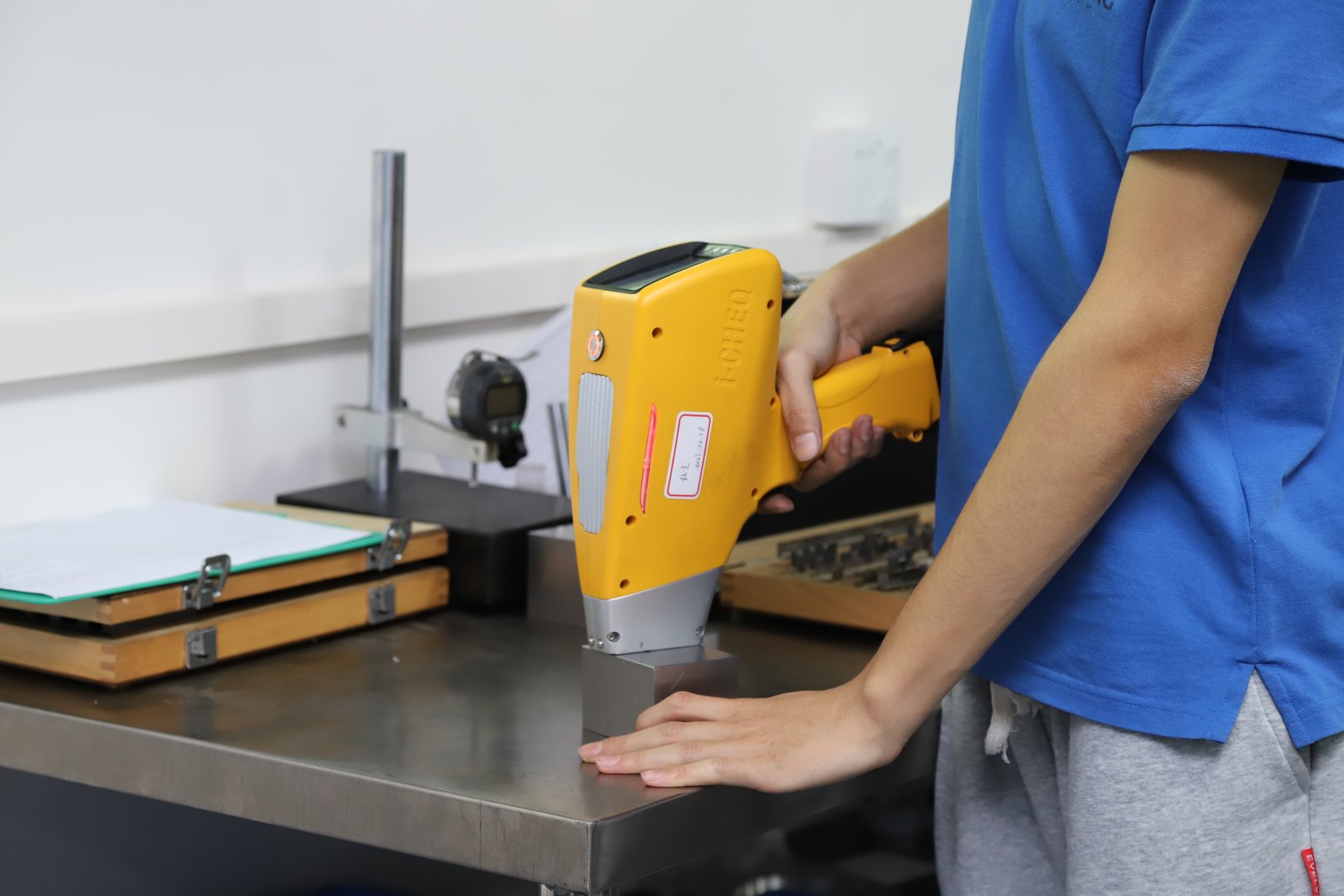
Medical material control is a chain with three links. The first is the specification line on the drawing: the alloy named against its standard with the condition, and a mill certificate required with the heat or lot number. A callout that says only "stainless" is an invitation; one that says "316L, annealed, mill certificate with heat number required" is a specification. The second link is the incoming check: the supplier verifies the incoming stock against the certificate with an alloy analysis such as XRF before any part is cut, and logs the heat number to the work order. The third link is the paperwork that holds the first two together.
The certificate, the incoming verification record, and the work order should all name the same heat, and when heat treatment or passivation is part of the route, those process certificates join the lot record with their own references. When you ask for a sample lot's paperwork, check that the three links agree; a chain that cannot be reconciled is broken regardless of what the individual documents claim. A shop that shows you the chain readily is saving you an audit surprise later, and on a medical part that is worth more than the lowest quote on the list.
Which surface finishes and treatments belong on medical parts?
Finish follows function, and on a medical part it is usually tied to cleaning and sterilization as much as to wear. A machined finish around Ra 3.2 µm is acceptable on non-contact faces of an instrument body. Functional and sealing faces call for Ra 1.6 µm or better, and Ra 0.8 µm and below belongs on bearing and sealing surfaces where grinding or polishing is the process that delivers it. The drawing should state the finish by feature group, because a single blanket Ra forces the shop to polish cosmetic faces to the seal-face standard.
Treatments carry their own records. Passivation of stainless removes the free iron that machining embeds and is standard on medical stainless; a passivated lot should ship with its process record. Electropolishing reduces roughness further and improves corrosion resistance on surfaces that contact fluids. Anodizing on aluminum is specified by class, and the class belongs on the drawing because the inspection follows it. Whatever the treatment, put it on the RFQ with its standard — a process added after quoting changes cost, lead time, and the record, and on a medical part all three matter to your file.
What documentation should a medical machining lot ship with?
Agree the documentation list in the RFQ, not at the dock. A defensible shipping package for a medical machining lot contains the following, and each item should tie to the purchase order and the material heat:
- Material certificate naming the grade, condition, and heat or lot number.
- Incoming material verification record linking the certificate to the physical stock.
- First-article inspection report covering every characteristic on the drawing.
- Dimensional report with measured values on the key characteristics, not pass/fail flags.
- Process records for passivation, electropolishing, or other treatments.
- Certificate of conformity binding the purchase order, the heat, and the results to the shipment.
The test of the package is whether the documents agree with each other and with the drawing revision. The CMM report should reference the same revision you quoted, the certificate should name the heat the report claims, and the values should be plausible against the process that produced them. A lot whose paperwork holds together is a lot you can pass to your device file; one whose documents drift apart is a finding you want at receiving, not after the parts have entered your inventory.
What should you audit in a machining shop before awarding medical work?
Start with the quality system and verify it by number with the issuing registrar — a system such as ISO 9001:2015 is the common baseline for component machining, with IATF 16949:2016 (product design excluded) and ISO 14001:2015 for automotive and environmental scope. A medical device program typically adds its own quality expectations through your supplier controls; ISO 13485 is the quality-management standard that governs the device maker's own system, so the question to ask a component shop is what certification scope it holds and how it manages build-to-print work. A shop that states its scope precisely is the honest partner an auditor accepts; one that overclaims a certification it does not hold should be filtered out on that basis alone.
Cleaning and the surface story are part of the medical lot, and they belong in the audit. Machined chips and coolant residue can hide in internal features, and on a part that will be cleaned and sterilized, the drawing should state the cleaning expectation and the supplier should confirm how it is delivered. Note that sterilization is part of the device process rather than the machining lot — the machined part is supplied clean and packaged to your instruction, and the sterilization validation sits in your own process. Ask how the shop cleans the parts it ships, whether packaging is to your specification, and how the two are documented, because the state the part arrives in is part of what your receiving process must handle without rework or delay.
Then examine the evidence of process control: incoming material verification records, calibration records for the CMM and gages, measured values on reports, and a material area where certified stock is segregated by heat. Ask for a redacted sample of a completed medical or high-integrity lot — photos of the parts with the paperwork, not a folder of certificates — and read it the way your auditor will. The quality page on this site explains how inspection, material verification, and documentation are handled, and the factory page shows what a visit or audit would see.
How do you write the RFQ so the quote matches the audit?
Write the RFQ as a specification with the record visible. Attach the drawing at a named revision with a datum structure, name every material by grade, condition, and form with the certificate requirement, and state the tolerance by feature with the key characteristics explicit. Name the surface finish by feature group with the measuring standard, list the treatments with their process standards, and attach the documentation list with instructions to confirm each item in the quote — including which operations are subcontracted, such as passivation or electropolishing.
Then read the confirmation for specificity. A supplier that answers "we hold ±0.003 mm on the milled features, we route these two seal seats to grinding, our 316L is XRF-verified against the mill certificate, and our passivation is done by a qualified processor whose record ships with the lot" is engineering your part inside its quality system. One that confirms everything with no questions has not engaged with the drawing. Start with a small first lot so the first-article report and the record format are proven while the exposure is small. The parts guide shows how material, tolerance, and finish land on a quoted part, and the FAQs cover the compliance and documentation questions that come up at this stage.
Frequently Asked Questions
Can a machining shop without ISO 13485 produce parts for a medical device?
Yes, when it works as a build-to-print component supplier. A machining shop holds the material, tolerances, and records your drawing demands, while ISO 13485 governs the device maker's own system, and the device maker keeps that responsibility. Ask the supplier to state its certification scope in writing before you order.
Which materials dominate medical machining drawings?
316L stainless for corrosion-critical and implantable hardware, 17-4PH for strength, Ti-6Al-4V for lightweight structural parts, and PEEK for single-use and MRI-compatible components, plus 6061 and 7075 aluminum for housings and instruments. Each is specified with its condition and ships with its certificate.
What tolerance can medical CNC machining realistically hold?
Milling and turning hold fit and alignment features to ±0.003 mm, with Cpk of 1.67 or higher on key characteristics and Cpk ≥ 1.33 on general characteristics. Capability is reported per characteristic: every report names the feature, its tolerance band, the sample size, the sigma method, and the study window., and precision grinding reaches ±0.002 mm. The tight band belongs on the features that control function. Features needing more than milling should be routed to grinding.
How is the material grade verified before a medical lot is machined?
Incoming stock is held against its mill certificate and the alloy is confirmed with an analysis such as XRF before cutting, with the heat number carried onto the work order. The incoming verification record is the link between the certificate and the material actually machined.
What documentation should a medical machining lot ship with?
The material certificate, the incoming verification record, the first-article report, the dimensional report with measured values, any treatment certificates, and the certificate of conformity. Read them as a chain — every document should name the same order and heat.
What surface finish should a surgical instrument part carry?
Ra 3.2 µm is fine on non-contact faces; functional and sealing faces call for Ra 1.6 µm or better, and Ra 0.8 µm and below belongs on bearing and sealing surfaces where grinding or polishing is the process. Stainless parts are passivated to remove free iron. Name the finish by feature group.
How should the first medical lot be structured?
Run a small first lot of the real production part before volume — it produces the first-article report, the material certificate, and the process data that production will be measured against. Verify the certificates, audit on video, and keep the package as the baseline for later lots.
Qualifying a machining shop for medical work and want the record logic explained?
Email [email protected] or call +86 13126536955 for an honest read on material, tolerance, finish, and what a lot ships with.