
How to Choose a CNC Machining Shop Supplier Online in 30 Minutes
Choosing a machining shop online feels like guesswork because most buyers look at the wrong things. They compare websites, count machines in photos, and chase the lowest number — then discover after the order that the shop was a trading desk, the tolerance claim had no measurement behind it, or the quote excluded the finishing that the next quote included. The good news is that the information that separates a real machining shop from a brochure is mostly findable or askable in a single working afternoon. This guide runs the 30-minute sequence: what to check on the website, what to ask in the first email, what evidence to request, and how to read the quotes that come back.
What can you verify from the website in the first ten minutes?
The website is not the shop; it is the shop's first filter. Ten minutes of disciplined reading tells you whether the company is even worth an email. Start with the company identity: a real manufacturer names its legal entity, its address, and its registration or business ID. A trading company names a brand and a city. When the legal entity and the registration are stated, you can check them independently, that single habit removes most of the risk of dealing with a middleman who does not own a machine.
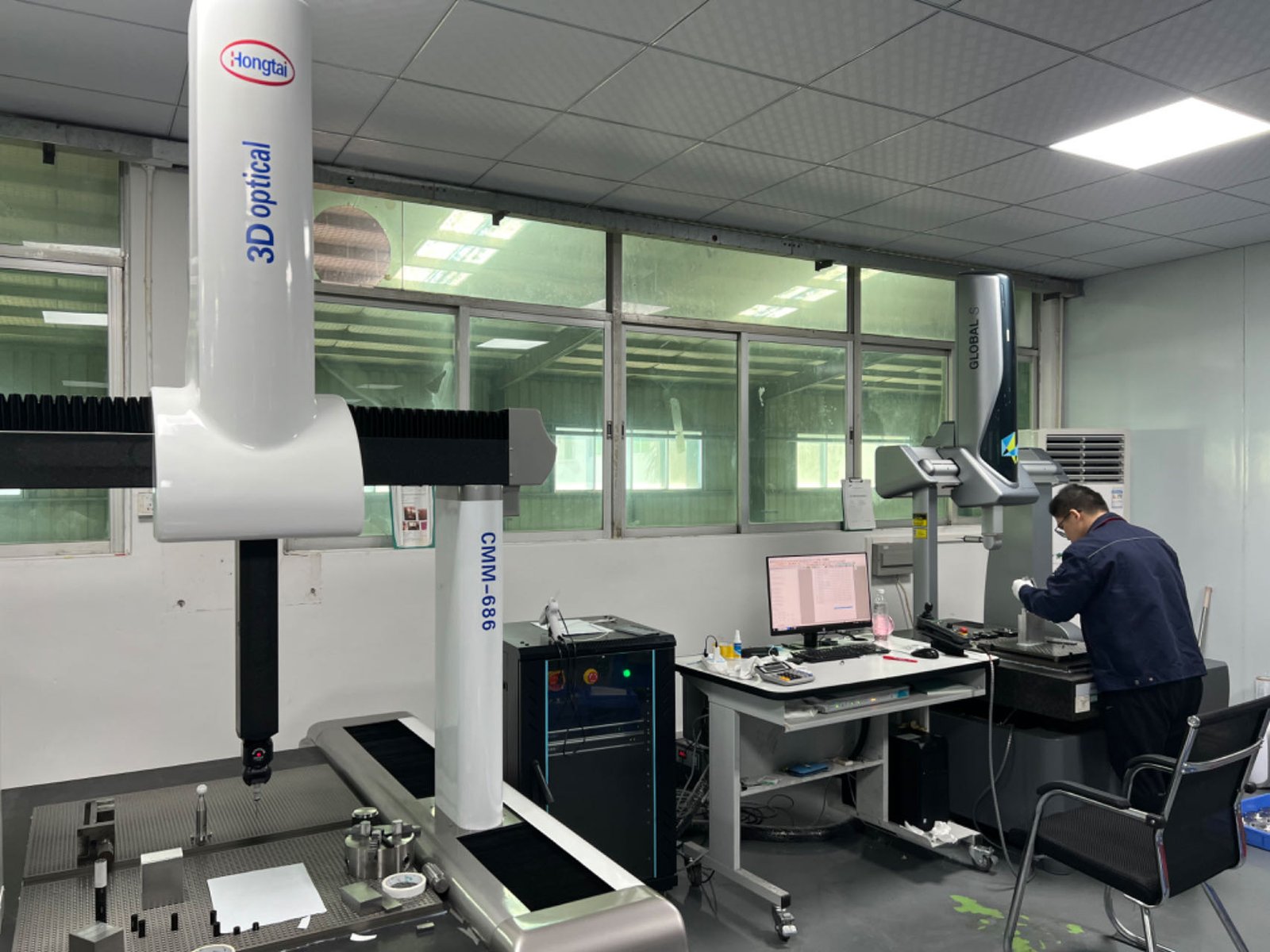
Next, look for the substance behind the claims. A serious machining shop shows its process range and its evidence: the processes it actually runs — milling, turning, mill-turn, grinding — the tolerance band it commits to, the quality system it operates under, and ideally real documentation such as quality certificates and inspection practices. Vague language — "high precision," "advanced equipment," "professional team" — is marketing; named processes, stated tolerances, and named certifications are facts you can verify. If a shop cannot explain what milling versus turning is for on its own site, the site was written by someone who does not machine.
Finally, check the coverage of the story. A shop that only shows parts photos but no factory, no process pages, and no quality system is presenting someone else's work. A manufacturer usually shows the floor, the machines, and the quality process because those are its assets. If the site has a factory page and a quality page with specifics rather than adjectives, that is a company confident enough in its operation to show it — the factory page and the quality page on this site are examples of that pattern.
Which questions should go in the first email?
The first email does double duty: it starts the technical conversation and it tests how the shop actually responds. Send a complete, honest package — the model or drawing, the material grade, the quantity, the finish, and the target date — and add the five questions that a real manufacturer answers easily and a trading desk cannot:
- Are you the manufacturer, and what is your legal entity and registration number? A straight answer with a verifiable ID is the first gate.
- Which machines and processes would run my part, and how do you verify the tolerances you quote? This tests whether the shop routes by geometry and can prove the result.
- What is included in the quote — material, machining, finishing, inspection, and freight under which incoterm? The itemization is the only basis for comparing quotes.
- Which of my features do you classify as critical, and how will each be measured? A shop that answers this has read the drawing and planned the inspection.
- Can you share a sample CMM or inspection report from a similar completed job? Real evidence from a past job is worth more than any promise.
The response tells you as much as the answers. A shop that replies within a business day with direct answers and the requested evidence is signaling that it has a process. A shop that replies late, avoids the questions, or answers with adjectives is signaling the opposite, regardless of the price it eventually quotes.
How do you verify the manufacturer behind the website?
Verification is a set of small, independent checks rather than one document, because any single document can be recycled. Check the registration or business ID against the official registry where the company is based — in China that is the public business registry, and the registration number is searchable. Check that the address on the site is a real, specific street address rather than a district or a city name; a real manufacturer can be located. Check the certificates by looking for the registrar and the certificate number rather than accepting the logo — ISO and IATF certificates carry a number that can be confirmed with the certifying body.
Then add evidence only a manufacturer has. Ask for the machine list with models, and for a photo or video of the floor if the site does not show one. Ask which machines would run your specific part — a manufacturer names the model; a trading desk names a category. Ask for a sample inspection report from a completed job, with the shop's name on it. Each of these checks is individually defeatable, which is why you run all of them: a trading desk that fakes the registration, the address, the certificates, and the machine list for a one-off inquiry is rare, because the effort exceeds the margin.
What tolerance evidence should a shop show before you trust its claims?
The single most common sourcing error is accepting a tolerance claim without asking how it is measured. Every shop can say it holds ±0.003 mm; the shops that actually do can show you how. Milling and turning hold fit and alignment features to ±0.003 mm in controlled production, with process capability demonstrated at Ppk ≥ 1.67 at the initial study on key characteristics and Cpk ≥ 1.33 on general characteristics. Capability is reported per characteristic: every report names the feature, its tolerance band, the sample size, the sigma method, and the study window., and features that need a ground surface condition or tighter size move to precision grinding at ±0.002 mm. Those numbers are only real if the measurement behind them is real.
Ask for the evidence in a specific form: a dimensional report from a completed job that shows measured values against the toleranced callouts, not a pass/fail tick list; the instrument that produced the numbers; and, where capability is claimed, the sample size and the characteristics tracked. A CMM report with a shop name and a part number is evidence. A statement that "we hold high precision" is not. The quality page on this site shows how critical dimensions are verified and what a measured report looks like, which is the standard a buyer should hold any candidate to.
How should you read the quotes when they come back?
Quotes are comparable only when they describe the same scope, and most quote-to-quote gaps are scope differences wearing the disguise of price. A quote that includes finishing and a second that excludes it are not one cheaper than the other; they are two different offers. The first step in comparison is to normalize: put each quote on the same line items — material, machining, finishing, inspection, and freight under the same incoterm — and the real differences appear.
The second step is to read the routing statement, not just the price. A machining quote should say which process runs each critical feature — milling for the faces, turning for the boss, grinding for the seat — because the routing decides the tolerance capability and the cost. A quote that names the routing and the datum chain is a routed quote; a quote that names only a number is a machine-loading decision.
The third step is to watch for the too-cheap quote, which on machined parts is usually not efficiency. A price far below the others for a complex part means the shop has not understood the geometry, is quoting the wrong process for the material, or is planning to recover the difference in changes and extras. When quotes disagree wildly, ask each shop to explain the gap in terms of process and scope. The shop that can explain is the one that priced the part; the shop that cannot is the one that priced a hope.
What do certifications actually tell you, and what don't they?
Certifications are a floor, not a ceiling. ISO 9001:2015, IATF 16949:2016 (product design excluded) and ISO 14001:2015 under third-party surveillance tell you the shop operates a documented quality system that is audited by an external body. That is a real signal: it means procedure exists for material control, inspection, non-conformance, and traceability, and it means the shop is used to being audited. For most machined components, that floor is what a buyer needs to build on with its own requirements.
What certifications do not tell you: that the specific shop floor runs your material well, that the tolerance claim has data behind it, or that the finishing partners are qualified. Certification is a system-level statement; your part is a part-level question. The buyer's discipline is to use the certificate as the entry ticket and then ask the part-level questions — process routing, material verification, inspection evidence, and the special-process chain. A shop that is certified and can also show part-level evidence is the one to keep; a shop that points only at its certificate is relying on the logo to do the work the evidence should do.
How should a first order be structured to keep the risk low?
The structure of the first order matters more than the choice of shop, because a well-structured small order de-risks everything after it. The standard sequence is prototype, then approval, then batch. The minimum order here is one piece, and a prototype runs on the same machines, tolerances, and inspection as production, so it is an honest forecast rather than a separate experiment. Approve the first article against every critical callout, then release the batch against the proven program.
The commercial terms belong in the first order, not discovered later. State the drawing revision, the material grade and condition, the quantity, the finish, the incoterm, and what happens if the drawing changes after the order. Agree on the documentation that ships with the lot — material certificate, inspection report, and conformity statement. Agree on the payment structure and the freight leg. Each of these is a line the shop can honor or hide, and a first order that settles them in writing tells you how the tenth order will behave. The FAQs page lays out the commercial terms in the same order a due-diligence process follows.
Which red flags should end the conversation immediately?
Some signals are worth a second email; others should end the evaluation. The first is an address that is not a specific location, or a refusal to state the legal entity. The second is tolerance claims without any measurement evidence after you ask — a shop that cannot produce a past inspection report is a shop that does not keep records. The third is a quote that will not itemize or will not name the routing. The fourth is vague answers to direct process questions, such as "depends on the part" when asked which process runs a critical feature. The fifth is a price so far below the market that the geometry cannot have been priced honestly.
None of these red flags is about nationality or size; they are about information discipline. A small real manufacturer answers direct questions with specifics because it runs the machines. A large trading operation answers with generalities because it has never loaded your part. The buyer's job is to reward the shop that shows its work — in the website, in the first reply, in the sample report, and in the quote structure — because that behavior is exactly what will continue through production, inspection, and delivery.
Frequently Asked Questions
How quickly can I get a quote from a CNC machining shop?
A serious shop replies within one business day. A simple, clearly-drawn part can be answered in as little as 30 minutes during working hours; a part with many operations, tight tolerances, or finishing takes longer because it needs a design-for-manufacturing review before a number is safe.
What files should I send to get an accurate machining shop quote?
A STEP or IGES 3D model plus a toleranced 2D drawing, with the material grade, quantity, finish, and tolerance standard. The complete package gets a routed quote; a screenshot gets a guess.
How do I verify a machining shop is a real manufacturer?
Ask for the registration or business ID and check it independently, look for a specific factory address rather than only a city, ask for the machine list with models, and ask to see real tolerance evidence such as a CMM report from a past job. A manufacturer shows these in writing; a trading desk cannot.
What tolerance evidence should a CNC machining shop show before I order?
Ask for a dimensional report from a completed job with measured values on toleranced callouts, and capability data at Ppk ≥ 1.67 at the initial study on key characteristics and Cpk ≥ 1.33 on general characteristics. Capability is reported per characteristic: every report names the feature, its tolerance band, the sample size, the sigma method, and the study window. Milling and turning hold fit features to ±0.003 mm; grinding reaches ±0.002 mm. A sample report is worth more than any capability statement.
What certifications should a CNC machining shop hold?
Look for a shop certified to ISO 9001:2015, IATF 16949:2016 (product design excluded) and ISO 14001:2015 under third-party surveillance, with the scope stated. Confirm the scope with the registrar rather than taking the logo on the website at face value.
Should I order a prototype before committing to a production batch?
Yes. The minimum order is one piece, and a prototype runs on the same machines, tolerances, and inspection as production. Approve the first article first, then release the batch against the proven program — one long uncertain schedule becomes two short predictable ones.
What lead times are realistic for CNC machined parts?
As a planning range: roughly 3 days for simple parts, 7 days for standard multi-operation parts, and up to 30 days for complex parts with many process steps or surface finishing. Lead time tracks process count, and a part outside the range gets a conversation instead of a number.
What separates a good machining shop quote from a cheap one?
A good quote names the routing — which process runs each critical feature — and itemizes material, machining, finishing, and inspection. A cheap quote hides lines or the routing. When two quotes disagree wildly, the gap is usually scope, not price.
Ready to run this vetting sequence on a real part?
Send your drawing, material, quantity, and target date to [email protected] or call +86 13126536955. You will get the direct answers this guide tells you to ask for — entity, routing, evidence, and an itemized quote.