
How Much Does CNC Machining Shop Work Cost in 2026? A Buyer's Cost Model
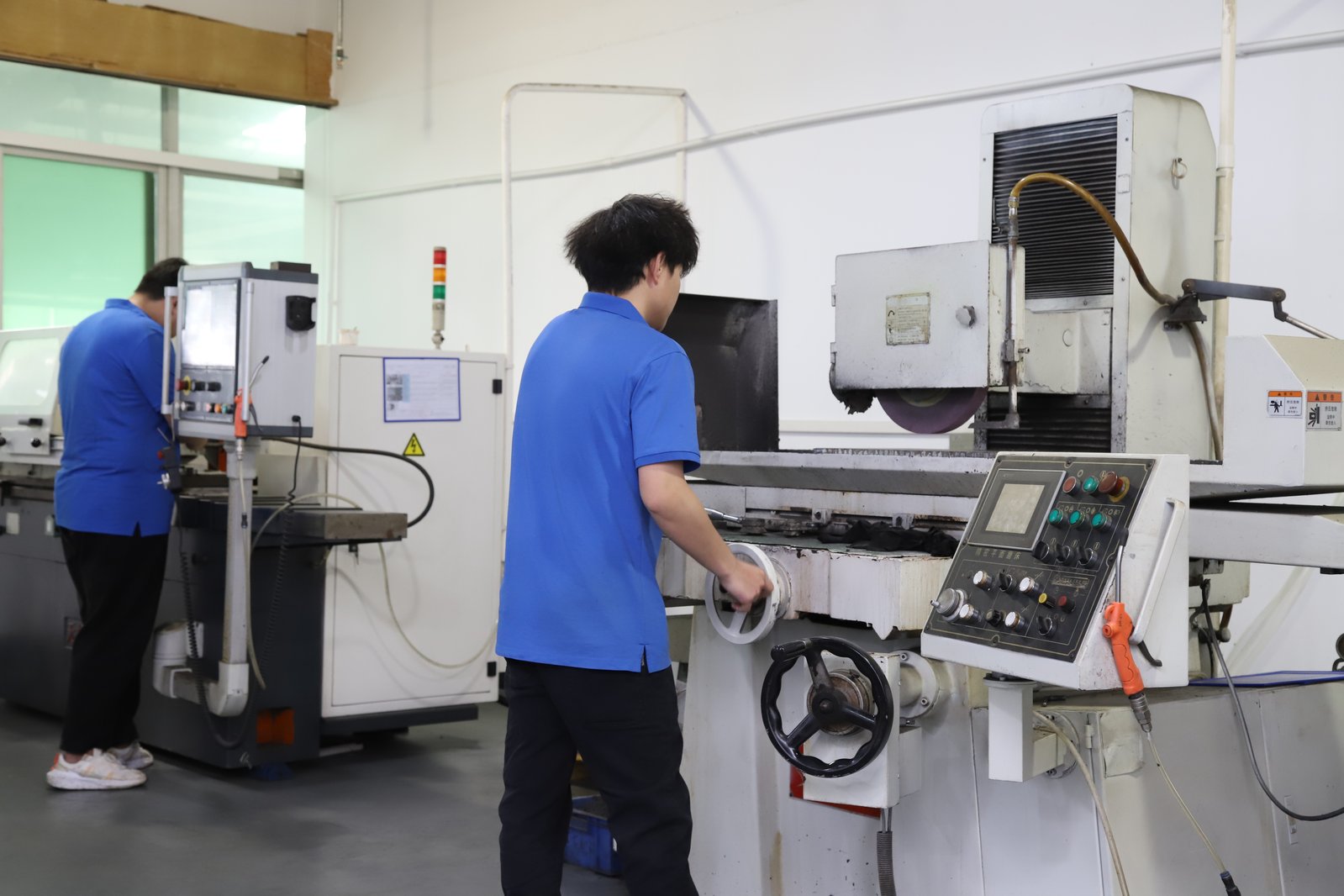
When you send a drawing to a CNC machine shop, you are not buying a part — you are buying a share of that shop's floor: its machines, its setups, its operators, and its inspection. The quote is where that share gets priced, and the shop's real costs are hiding in plain sight in the machine list, the process route, and the lines the quote does not show. This guide is the buyer's cost model for CNC machining shop work in 2026. It walks through what a shop quote really contains, why the machine mix on the floor sets the price before your part is even scheduled, how geometry, material, tolerance, and quantity move each line, how to read a quote for hidden cost instead of taking the total on faith, and how to build a budget that holds across prototype, bridge, and production.
What does a quote from a CNC machine shop actually pay for?
Strip any serious shop quote back to its bones and the same lines appear underneath the formatting. Each line has a job, and each line can hide a cost if the shop does not name it.
| Line item | What it pays for | What moves it |
|---|---|---|
| Material | The stock at the grade and size on the drawing | Grade, form, and whether the lot is verified against a mill certificate |
| Setup and programming | Fixturing, toolpath work, and first-piece prove-out | A fixed cost per order that dominates low-volume work |
| Machining time | Spindle minutes to remove material and hold the features | Feature count, material toughness, and tolerance per feature |
| Secondary operations | Threading, anodizing, plating, heat treatment, and similar steps | Named or outsourced? The hand-off is part of the price either way |
| Inspection and documentation | CMM time, SPC records, material certificates, reports | Every tight characteristic adds measurement time and proof |
There is no honest single number for what a shop charges, because the drawing, the material, the quantity, and the floor behind the quote decide it together. What stays consistent is the structure, and the structure is what makes a shop quote readable, comparable, and auditable.
Why does the machine mix set the price before your part is scheduled?
A shop's machine list is its cost structure made visible. The floor behind this site runs 100+ machines, named by brand — Mazak, Brother, Citizen, Star, and Tsugami — with 50+ three-axis centers for high-volume prismatic work, 20+ four-axis centers for multi-sided parts, 20+ five-axis centers for complex geometry in one setup, 25+ lathes including Swiss-type machines for slender work, and 7+ grinders for the ±0.002 mm finish. That mix matters to your quote in two ways.
First, the right machine for your geometry is the economical machine. A part that needs five setups on a three-axis center may run complete on a five-axis machine in one, and a slender shaft that chatters on a conventional lathe holds its tolerance on a Swiss-type. A shop with the full mix can route your part to the machine that prices it lowest; a shop with one machine type routes your part to the machine it has. Second, depth of capacity is price insurance. The index page of this site puts it plainly: a floor with that mix can absorb a spike without lying about a date, which is what keeps the quoted lead time — and the expedite premium you are not paying — real. When you read a quote, read the machine list underneath it as the first page of the cost model.
How does geometry decide which process, and what price?
Geometry picks the process, and the process picks the price. Prismatic parts — housings, brackets, manifolds — belong on a milling machine. Round parts — shafts, pins, bushings — belong on a lathe. Mixed geometry that needs both faces and diameters belongs on a mill-turn center where it can run in one clamping instead of traveling between machines. And the features that a mill or lathe cannot hold — bearing seats, sealing surfaces, tight-finish diameters — belong on a grinder, the step that separates a real shop from a reseller.
Every process boundary a part crosses is a setup, and every setup is a line on the price. A part that completes on one machine in one orientation costs less than the same part that must travel across the floor and be re-fixtured twice. The design-for-manufacturing question to ask before you quote is simple: which features on this drawing force a second process, and can the geometry be arranged so they do not? A drawing that respects the process boundaries is a drawing the shop can price at its natural cost.
Which material should a shop-work budget assume?
Material moves a shop quote twice: once as stock, and again at the cutting edge. Aluminum 6061 is the economical default for housings and brackets — it cuts fast and anodizes well. The free-machining grades — 303 stainless, 12L14 steel, C360 brass — keep turned and machined parts economical where the application allows them. The demanding grades — 304 and 316 stainless that work-harden, titanium, and the heat-treatable steels — run slower, wear tools, and push the price up on every feature that touches them. The parts page of this site names the material range the floor actually runs; the budget rule is shorter: specify the grade you need, not the family, because "stainless steel" is not a price — 303 and 316 are.
Two rules keep the material line honest. First, verify the shop checks incoming stock against its mill certificate — every lot on this floor is XRF-checked against the mill cert before cutting, so a substituted alloy is caught at the door, not in service. Second, name the finish on the first quote: anodizing grows the dimension, so the allowance has to be machined in, and a part reviewed with its finish is a part whose price does not surprise you at the invoice.
How much do tolerance and finish move the price?
Tolerance is the steepest part of the machining cost curve. A feature at ±0.1 mm is routine. Move it to ±0.003 mm and the machine, the tool, the parameters, and the inspection all change at once — the price can more than double. Drop a critical surface to ±0.002 mm and the feature moves to grinding, a separate process with its own machine and its own measurement. On this floor, milling and turning hold ±0.003 mm on critical features and precision grinding reaches ±0.002 mm, verified on Hexagon CMMs with process capability at Ppk ≥ 1.67 at the initial study on critical characteristics and ≥ 1.33 on general ones — a demonstrated Cpk of 1.851 on a representative length characteristic is the kind of evidence that separates a measured claim from a slogan.
Read the tolerance band before you read the index. Cpk is a ratio of the tolerance band to the process spread, not an absolute measure of accuracy. The figure above was recorded on a length characteristic with a 0.4 mm band (76.1–76.5 mm) — wide by design. Hold the same process spread against a ±0.005 mm feature and it fails outright. Ask for the band, the subgroup count and the sampling window on every capability number a supplier quotes.
Hold the tight band only on the features that earn it — the bore that takes the bearing, the face that seals, the datum everything else references — and leave the rest on the general block. Every dimension pulled back from ±0.003 mm removes machine time, inspection time, and risk from the price, and it is the cheapest single saving on any shop drawing.
How does quantity bend the unit price at a machine shop?
The setup is the same whether you order one part or a thousand: the fixture, the program, and the first-piece prove-out cost the same either way. At one piece, that fixed cost lands entirely on the part, which is why a prototype looks expensive. As quantity rises, the setup spreads across the run and the unit price falls toward the sum of the material and the machining time.
The honest shop quotes the curve, not just its ends: a single piece at MOQ 1 on the same machines and tolerances as production, a bridge order of ten to fifty parts that exercises the fixtures before you commit volume, and the production tier where the fixed lines are amortized. And once a part is proven, the reorder skips the prove-out: the same part ships faster and carries a lower per-piece rate, because the setup is no longer a gamble. Budget the first order at its full setup weight and the reorder at the proven rate, and the two ends of the curve will stop surprising you.
What hidden costs sit inside a machine shop quote?
The visible lines are half the price; the other half hides in what the quote does not say. A quote that prices per piece but not per part number has hidden the setup you will pay again on the reorder. A quote that absorbs inspection into the margin has hidden the CMM report you will recreate at incoming. A quote that folds finishing into a vague "included" has not told you which process or what allowance. A quote that prices one process and dates another has hidden the schedule risk. And a quote from a shop that cannot name its machines, its measurement, or its certificate numbers has hidden the verification entirely.
The supplier itself is the largest hidden cost of all. The index of this site frames the first risk exactly: a real machine shop is not a trading desk. A trading desk adds a margin and removes accountability; a real shop answers with specifics — the machine list by brand and count, a recent CMM report on a similar part, and the material verification method — because it has nothing to hide. The brand behind this site is Dongguan Zhuohang Ltd, incorporated 2005, business registration 91441900MA4UWT6X39, running a 6,800 m² facility in Hengli Town, Dongguan, with 100+ staff and the 100+ named machines above. Its certificates carry numbers a buyer can verify: ISO 9001:2015 (116024/A/0001/UK/En), IATF 16949:2016 (product design excluded) (131941/A/0001/SM/En), and ISO 14001:2015 (116024/B/0001/UK/En). When the entity, the machines, and the certificate numbers are checkable in writing, the margin stays in the quote where you can read it.
How do you read a shop quote for hidden cost, and compare two shops?
Read a shop quote the way this site audits a shop: line by line, with the verification questions running underneath. Make sure every quote states the material grade and how the incoming lot is verified, the machine type and axis count the part will run on, the process route for every feature, the tolerance it will actually hold per characteristic, the finishing and secondary operations included and who performs them, and the quantity tier with prototype, bridge, and production separated.
Compare the itemized routes at the quantity you actually plan to order, because the same drawing at fifty pieces and at five thousand is two different cost problems — the setup is the same, but its weight per piece is not. And weigh the price against the floor behind it. The lowest quote on machining work is rarely the lowest total cost: the part that arrives without its CMM report or material certificate is the part you will pay to inspect, rework, or replace. The evidence is part of the product, and a shop that treats it as an extra is telling you where its real margin lives.
How do you build a 2026 machine-shop budget that holds?
Build the budget the way a good shop reviews the part — drawing first, floor second, quantity third.
- Get the DFM review before you fix the number. Send the drawing and ask the shop to flag the features that are tighter than the function needs, the geometry that forces a second process, and the finish that adds a process step. Fix the drawing first; then budget the fixed part, not the first draft.
- Ask for the machine route in the quote. Which machine type, which axis count, how many setups? A part that runs complete on one machine is a different cost problem from one that travels across the floor, and the quote should tell you which you are buying.
- Quote the prototype, the bridge, and the production tier on the same page. The prototype at MOQ 1 proves the process at its full setup weight; the bridge exercises the fixtures; the production tier shows where the fixed lines amortize. Budget all three at your real quantity, and the 2026 number will survive the first invoice.
Keep the closing rule in front of you: read the quote as a route across a real floor, not a total, and the machine-shop budget you build will hold across the drawing changes, quantity shifts, and reorders that real sourcing always brings.
Frequently Asked Questions
How much does CNC machining shop work cost in 2026?
No honest shop quotes machined parts without a drawing, because the price is set by the material grade, the process route, the tolerance band, and the quantity. A simple 6061 bracket at production quantity sits low; a complex part in a demanding grade with tight tolerance and finishing at prototype quantity sits far higher. Budget the route the drawing actually needs.
Why is a prototype from a machine shop so much more expensive per piece than production?
Because the first piece carries the full setup, programming, and first-article cost on a single unit, while a production run spreads those fixed costs across the batch. That is setup economy, and it is why prototype, bridge, and production belong on the same quote.
What tolerances can a machining shop hold?
Milling and turning hold ±0.003 mm on critical features, and precision grinding reaches ±0.002 mm, verified on Hexagon CMMs with process capability at Ppk ≥ 1.67 at the initial study on critical characteristics (a demonstrated Cpk of 1.851 on a representative length characteristic) and ≥ 1.33 on general characteristics.
How do I know a low shop quote is real and not a missing line?
Ask for the three things in writing before you compare totals: the machine list by brand and count, a recent CMM report on a similar part, and the material verification method. A real shop returns them in a day; a trading desk hesitates. The lowest quote without evidence is rarely the lowest total cost.
What is the minimum order, and do reorders cost less?
The MOQ is 1 piece, so a prototype and a production lot can share one line. Once the process is proven, reorders skip the first-article prove-out and ship faster at a lower per-piece rate, because the setup is amortized.
Which company and certificates back the quote?
The brand behind this site is Dongguan Zhuohang Ltd (registration 91441900MA4UWT6X39), incorporated in 2005, at a 6,800 m² facility in Hengli Town, Dongguan, with 100+ staff and 100+ machines, certified to ISO 9001:2015, IATF 16949:2016 (product design excluded), and ISO 14001:2015 with verifiable certificate numbers.
Want a shop quote you can read line by line?
Email the STEP or IGES model, the material grade, and the toleranced 2D drawing to [email protected] or call +86 13126536955. You will get the machine list, the certificate numbers, a design-for-manufacturing review, and an itemized quote with the prototype and production tiers on the same page.