
Sourcing machined parts from a distance inverts the buyer's normal leverage. A domestic failure is corrected by refusing payment or returning parts; a cross-border failure is corrected in weeks, after the money has already moved and the parts are on a boat. The buyer's protection therefore has to be built before the first payment, in a file of evidence that can be assembled from a desk and read against the shop's claims.
That file is the subject of this guide. It contains eight checks, ordered so that each one builds on the last: the entity, the certificates, the process evidence, the material control, the quote structure, the payment structure, the first order, and the findings that end the process. A shop that clears the file has earned a trial order; a shop that fails it early has saved the buyer from running the checks that would have failed later — after money moved.
1. What goes into the due-diligence file before the first PO?
Build the file in the order the checks depend on each other. The first page is the entity: the legal name, the business registration number, and the registered address, collected from the shop itself and compared across its website, its quote, and its invoice. The second page is the certificates, with numbers that resolve to their registrars. The third is process evidence from real lots — inspection reports, material certificates, and calibration records. The fourth is the quote structure and the payment terms. Each page is small, and each is checkable from a desk.
The file has a discipline that matters as much as its contents: nothing in it is taken on faith. A certificate logo is not evidence until the number resolves; a process description is not evidence until a sample report backs it; a price is not a quote until it names the drawing revision and the incoterm. The buyer who builds the file this way is not distrusting the shop; they are creating the record that a repeat relationship will be managed against, because the file from the first order is the baseline every later order compares to.
The file is also the fastest screen. Most of its checks take minutes each, and a shop that fails an early check removes itself without the buyer spending days on quotes and samples. The buyer who runs the file in order on three candidate shops usually finds one clear winner, one that fails clearly, and one that needs a closer look, and the closer look is now aimed at a specific page of the file rather than at the shop in general.
2. How do you verify the shop behind the quote is the shop that cuts the parts?
The entity check answers the most expensive question in sourcing: who will actually receive the money, and is that the entity that runs the machines? The registered name, the registration number, and the address should be stated by the shop and consistent across every document it sends. The bank account that would receive the payment should carry the registered entity's name. A brand is not the same thing as a legal entity, and the link between the two must be explicit and checkable.
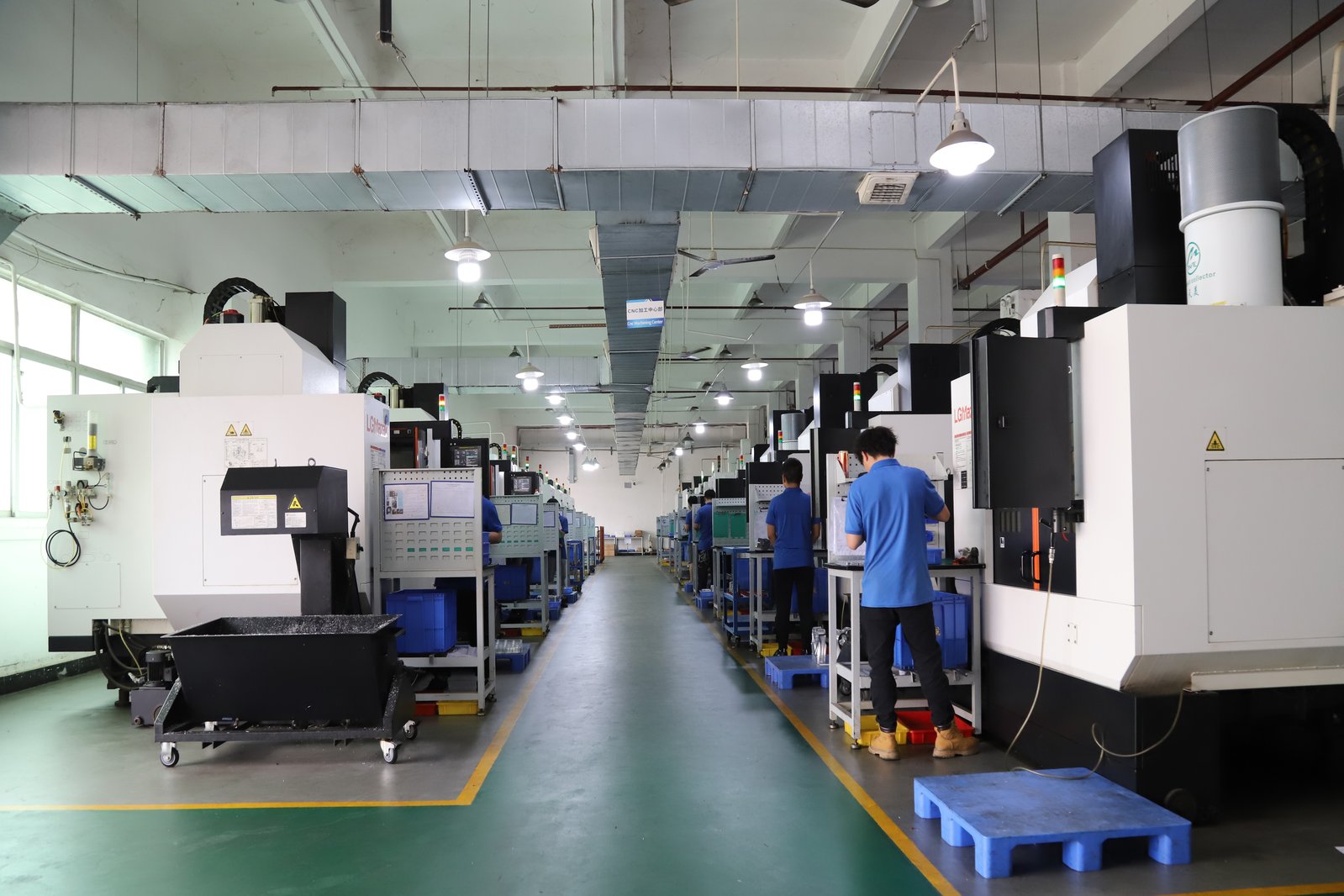
The factory claim is verified next. Ask for the machine list with models and counts, ask which machine class would run your part, and request a live video walk-through that shows the floor, the machines, and the inspection bench. A genuine manufacturer answers these requests directly and films its own workshop; a broker or reseller answers by describing someone else's floor and defers the tour. The distinction is worth establishing before the quote, because the quote from a broker carries a margin that the manufacturer's quote does not.
Cross-check the entity against the public registration where the registry is searchable, and note whether the registered scope covers machining. The factory profile on this site — see the factory page — is the kind of disclosure a real shop can produce about itself, and a buyer should expect an equivalent level of specificity from any candidate before the first wire.
3. Which quality-system claims can you check from your desk?
The certificates are the cheapest high-value checks in the file, because they resolve against public databases. ISO 9001:2015 is the quality-system baseline for component machining; IATF 16949:2016 (product design excluded) extends it for automotive supply chains, and ISO 14001:2015 covers environmental management. Each certificate names its issuing registrar and its scope, and the registrar's database confirms whether the certificate is current and what it covers. The check takes minutes and converts a logo into a fact.
Two failure modes survive a visual scan, and both are caught by the registrar lookup. The first is a lapsed certificate, still displayed long after its expiry. The second is a certificate whose scope does not include machining — a common decoration on sites that resell machining. Ask for the certificate number and the scope statement, verify both against the issuer, and note the date of the last surveillance audit, because surveillance is where a quality system is actually exercised.
The quality-system page of a real shop describes its scope and its practice in a way a buyer can audit; this site's quality page is an example of the level of disclosure to expect. A shop that answers the certificate question with a number and a scope, without hesitation, has been asked by serious buyers before, and that itself is a quiet signal about the customers it serves.
4. What process evidence separates a real shop from a reseller?
Process evidence is what the shop's own operations produce, and it is the only proof that the shop cuts parts rather than forwards them. The evidence set is inspection reports with measured values against the drawing callouts, material certificates tied to real lots, and calibration records for the instruments behind the reports. Ask for a redacted sample of a completed lot's paperwork and read it as an auditor would: do the numbers sit inside the tolerances, does the certificate name the heat the report claims, and does the report reference a drawing revision?
Read the evidence against the claims in the sales conversation. If the shop says it holds ±0.003 mm on milling and turning and ±0.002 mm on grinding, the sample report should show measurements at that level, not a column of pass marks. If it claims capability such as Ppk ≥ 1.67 at the initial study on key characteristics and Cpk ≥ 1.33 on general characteristics. Capability is reported per characteristic: every report names the feature, its tolerance band, the sample size, the sigma method, and the study window., the data behind the claim should exist in the report. A shop that produces real evidence for real lots is a shop whose process you can audit; one that produces adjectives is asking you to audit its confidence instead.
The evidence request has a second function: it tests responsiveness. A shop that sends the sample paperwork promptly, in order, without excuses is a shop that treats records as routine. A shop that hesitates, offers photos instead of documents, or explains why the records are unavailable is showing you what its record-keeping actually looks like, and that is what will arrive with your first lot if you proceed.
5. How should material verification be handled on the first order?
Material identity is the one requirement no dimensional report can rescue, and it belongs in the file before the first order is placed. Ask how the shop verifies incoming stock against its certificate — an alloy check such as XRF for metals, lot records for plastics — and what happens when a verification fails. The answer should describe a procedure with a consequence, not a hope that the supplier sent what the invoice says.
The certificate chain on the first order should be written into the PO. The material certificate names the grade, condition, and heat or lot; the shop's incoming check ties that certificate to the physical stock; and the work order carries the heat number through to the finished parts. The certificate that ships with the lot should be the certificate of the lot that was cut, and the buyer should check that the three documents agree when the parts arrive.
Name the material requirement precisely in the RFQ so the chain has something to verify against. A grade with its condition — 6061-T6, 17-4PH in H1025, 316L in its annealed state — is a claim that a certificate can back; "aluminum" or "stainless" is an invitation. The material control that protects a machining order is written before the order, and it is the cheapest insurance the file contains.
6. What does the quote need to tell you beyond the price?
A machining quote is only comparable when it is structured. Ask each candidate to name the drawing revision it priced, to split the price into material, machining, setup, and inspection, and to state the incoterm and the documents that ship with the parts. The structure converts a number into a map of the order, and the map is what reveals whether two quotes are for the same work at the same quality level.
Read the quote against the answers from the earlier checks. If the shop claims a tight tolerance band and the quote carries no inspection line, the inspection is either hidden in another line or absent. If the incoterm is missing, the price is incomplete by definition. If the quote does not commit to the material certificate and the dimensional report, it has not quoted the order the buyer intends to place. Each omission is a line the buyer will discover later, and later is more expensive.
The quote should also answer the quantity question: what is the unit price at the trial quantity, and how does it move at larger volumes? The spread between the two reveals the setup and programming content and shows whether the supplier's pricing follows the real cost structure of machining, where the fixed work is spread over the run. A quote that answers both quantities is pricing the relationship; one that offers a single number is pricing a transaction.
7. How is the first order structured to retire risk in stages?
The first order is the point where the file stops being theory and becomes evidence, and its structure should mirror the file's checks. Order a small quantity of a representative part — real tolerance callouts, a material you will use at scale, and the documentation package as a deliverable. The purpose is to observe how the shop machines, measures, documents, and communicates, because that behavior is what will scale if the relationship grows.
Gate the payments on evidence rather than on the calendar. A deposit funds the material and the start; the first-article approval releases the production run; and the pre-shipment inspection together with the shipping documents releases the balance. Each gate has a named evidence set, written into the PO before the order is placed. A shop that accepts the gates is confident in its process; a shop that resists them is asking the buyer to carry the risk of the relationship alone.
Judge the trial order on the behavior as much as the parts. Did the quoting questions show an understanding of the drawing? Did the first-article data arrive complete, on time, and legible? Did the material certificate reconcile with the lot? Did the shop flag the schedule honestly when it moved? These behaviors are the real deliverable of the trial order, and they are the basis on which the first order should be judged before any repeat volume is released.
8. Which findings should end the sourcing process?
Some findings terminate the file regardless of price. An entity that shifts between the quote and the invoice, or a bank account under a name other than the contracting entity, is a structural problem that no machining quality repairs. A certificate that does not resolve against its registrar, or whose scope excludes machining, removes the quality-system claim the file was built on. A shop with no inspection records, no material verification procedure, and no live look at its floor has failed the checks that define a factory.
Payment pressure belongs in the same column. A request for the full amount before any work exists, a personal account "for convenience," or an escalation the moment the buyer asks for verification are all signs of a transaction that the buyer should not enter. The price pattern matters too: a quote far below the market, delivered instantly with no process questions, is usually a quote for a different part — a lighter process, a looser tolerance, or no documentation — and the difference is discovered after payment.
Stop-and-check list: entity shifts between documents · bank account not in the contract entity's name · certificate numbers that do not resolve · no inspection records or material verification · no live look at the floor · full payment demanded before work · a price that is low because the specification is different. Any single item pauses the file; two or more end it.
Run the file in order and the sourcing decision becomes a process rather than a gamble. The entity, the certificates, the process evidence, the material control, the quote, the payments, and the trial order each retire a specific risk, and the findings that would end the process are visible before the money moves. A shop that clears the file has earned the first order, and the first order, structured as a staged trial, is how a new supplier becomes a proven one. The factory behind this site is used to being held to files like this, and it quotes, verifies, and documents accordingly.
Frequently Asked Questions
What is the fastest way to screen a CNC machining shop?
Build the due-diligence file in order: the registered entity and the account you would pay, the certificate numbers checked against their registrars, sample inspection records from real lots, and a live video look at the floor. A shop that fails any early check has saved you from running the rest, and a shop that passes all of them has earned a structured trial order.
How do I know the shop I am quoting is the shop that will cut my parts?
Match the legal entity across the registration, the quote, and the invoice, and confirm the bank account is in that entity's name. Then ask for a live video tour that shows the machine class your part would run on and the inspection bench that would measure it. A manufacturer films its own floor on demand; a reseller has to ask someone else.
Which quality-system claims can I verify from my desk?
The certificates that name an issuer and a scope — ISO 9001:2015 as the baseline, with IATF 16949:2016 (product design excluded) and ISO 14001:2015 where relevant — can be checked against the issuing registrar's database in minutes. Ask for the certificate number and the scope, and confirm the surveillance audit is current. A logo without a verifiable number is decoration.
What process evidence separates a real shop from a reseller?
Evidence produced by the shop's own process: inspection reports with measured values against drawing callouts, material certificates tied to real lots, and calibration records for the instruments. Ask for a redacted sample of a completed lot's paperwork and read it the way an auditor would — if the numbers and the process story do not agree, the shop is not producing the evidence itself.
How should the first order be structured to retire risk in stages?
Make it a small order of a representative part with the full documentation package as a deliverable, and gate the payments on evidence rather than on the calendar. A deposit funds the material, the first-article approval releases production, and the pre-shipment inspection and shipping documents release the balance. The structure is what converts a new supplier into a proven one.
What does the quote need to tell me before I compare it?
The quote should name the drawing revision it priced, split the price into material, machining, setup, and inspection, state the incoterm, and list the documents that ship with the parts. A structured quote is pricing the order you sent; a lump sum is hiding the lines you will discover later. Compare quotes that carry the same structure.
How is material identity verified on a machining order?
The supplier should verify incoming stock against its mill certificate before cutting — an alloy check such as XRF for metals — and carry the heat or lot number onto the work order. The certificate and the verification record then travel with the parts. A substituted alloy passes every dimension and fails in service, so the check belongs before the first chip.
Which findings should end the sourcing process?
An entity that shifts between the quote and the invoice, a bank account under a different name, certificate numbers that do not resolve, no inspection records at all, no live look at the floor, and pressure to pay in full before any work. Any single finding is grounds to stop; two of them mean the search should restart with a different shop.
Building a due-diligence file and want a shop that passes it?
Send the drawing and the quantity through the contact page — the response includes the entity details, the certificate numbers, the process evidence, and a staged quote that matches the file this guide describes.