
5-Axis CNC Machining Shop: The Buyer's Verification Plan for the Costliest Capability Claim
Of all the claims a machine shop can make, "we run 5-axis" is the most expensive one to get wrong. A 5-axis machine costs several times what a 3-axis machine costs, its programs take longer to create and verify, and its work — curved surfaces, compound angles, five-sided features machined in one setup — is exactly the work whose errors are hardest to catch by eye. That combination makes the capability claim worth more scrutiny than any other line in a shop's marketing. This guide is a buyer's verification plan for a 5-axis claim: what to ask about the machines, the programs, the test parts, and the measurement before you commit geometry that only five axes can make.
Of all the claims a shop makes, why is the 5-axis one the costliest to get wrong?
Because the word "5-axis" is doing more work than it appears to. A shop can truthfully say it runs 5-axis machines and still not be able to make your part economically, or at all. Some shops own one 5-axis machine for demonstration while the production floor runs 3-axis. Some run their machines in indexed 3+2 mode — rotating to a fixed angle and cutting with standard 3-axis motion — which covers angled features but not the continuous curved surfaces that need simultaneous motion. Only a genuine simultaneous program uses all five axes moving together under one tool path, and only one of those three shops can actually produce the impeller, the compound-angle housing, or the twisted bracket your drawing describes.
The verification problem is that the difference does not show up in a photo, a machine brand, or even a machine count. It shows up in the combination of machine type, control software, programming skill, and measurement ability, which is why a 5-axis claim needs a verification plan rather than a checkbox. The buyer's job is not to become a machining expert; it is to ask the questions that separate a real simultaneous 5-axis operation from a shop that owns a 5-axis machine and runs it like a 3-axis one.
What does the machine list need to show for a 5-axis claim to hold?
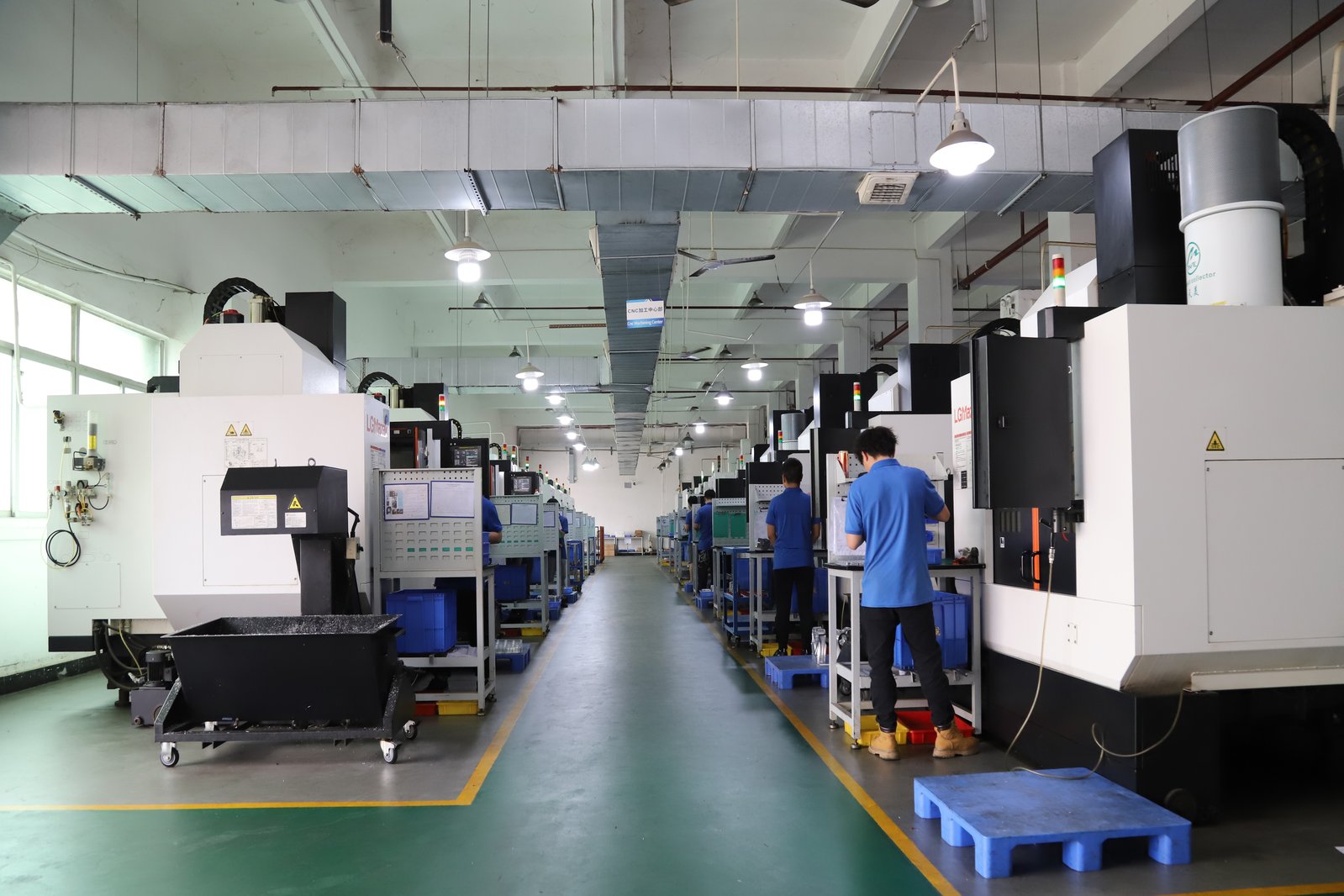
The machine list is the first evidence, and it needs more than a count. Ask for the machine groups by axis type and configuration — how many simultaneous 5-axis machining centers, how many are trunnion or table-rotary versus head-rotary designs — because the configuration changes what the machine can reach. A credible list reads like a real floor: a mix where 3-axis machines handle high-volume prismatic work, 4-axis machines cover parts that need a rotary index, and 5-axis machines take the complex geometry that justifies their rate. For reference, a full CNC floor of the kind described here holds 3-axis machining centers (50+), 4-axis machining centers (20+), 5-axis machining centers (20+), lathes including Swiss-type (25+), and grinders (7+) — the point being that 5-axis capacity appears as a deliberate layer of a large machine mix, not as a single showcase machine.
The questions that follow the list matter as much as the list itself. Which of your 5-axis machines run simultaneous motion, and which run indexed 3+2? What is the largest part envelope and the heaviest part each machine handles? Which machine would my part run on, and why that one? A shop that answers with machine names, axis configurations, and a reason is describing a real routing decision. A shop that answers "we have 5-axis" and stops is describing a brochure.
Which questions separate a 5-axis program from a 5-axis machine?
The machine is only half of 5-axis capability; the program is the other half, and it is the half that fails first. A 5-axis tool path is created in CAM software with a post-processor written for that specific machine and control, and it must be checked for collisions, not just between tool and part, but between tool, holder, fixture, and the machine's own rotating table or head. Shops that run 5-axis well do this simulation before cutting; shops that merely own the machine often discover collisions on the first test cut, which is how scrap happens on expensive parts.
The questions that reveal the programming layer: Which CAM system do you program 5-axis work in, and who writes the post-processors? Do you simulate full machine motion, including the fixture and holder, before the first cut? How do you handle a tool-path error discovered mid-run — stop and correct the program, or adjust the part? For a buyer, the revealing answer is not the CAM brand; it is whether the shop treats the program as an engineered deliverable with its own verification, because the program is where 5-axis cost and 5-axis risk both live.
What test part actually proves a shop's 5-axis work?
The only evidence that settles a 5-axis claim is a part — a test piece designed to exercise the capability you are buying. A meaningful 5-axis test part carries three features at once. The first is a continuous curved surface that indexed 3+2 work cannot make — the feature only simultaneous motion produces. The second is two or more faces whose relative position must hold a tolerance, which is the point of machining in one setup instead of re-fixturing. The third is a feature that demands real tool reach, such as a deep pocket or an undercut, which shows the shop can manage collisions and tool length. A test part with those three features, machined and measured, proves more than any machine list.
The discipline is to define the acceptance criteria before the test part is cut. Specify the tolerance band for the curved surface, the measurement method, and the report format, and agree that the test part is a gate — production of the real parts starts only when the test part passes. A shop confident in its 5-axis work welcomes a well-designed test part, because it converts an argument about capability into a measurement. A shop that resists the test part, or proposes to demonstrate on a simple bracket, is telling you what it thinks of its own 5-axis program.
How is 5-axis measurement verified, and how can you trust it?
Curved surfaces cannot be verified the way prismatic features can. A bracket is checked with calipers and touch points against linear dimensions; a curved surface is verified against the CAD model, within a defined profile tolerance band, and the measurement must be dense enough to catch a deviation between the touch points. The practical question for a buyer is what measurement the shop actually has: a CMM running a scanning routine that samples the surface densely, a dedicated 5-axis measurement routine, or an outsourced inspection service. The answer changes how fast a deviation is caught and how much you can trust a clean report.
For the parts that matter most, an independent check settles the argument. Have the test part or the first article measured by a third-party laboratory with its own CMM or scanner, and compare the deviation report to the shop's. Two independent measurements agreeing on a curved surface is real evidence; two measurements disagreeing is a conversation about who is wrong, which is exactly what you want to have on a test part rather than on a production batch. Measurement is the last link in the 5-axis chain, and it deserves the same scrutiny as the machine and the program.
What red flags end the 5-axis conversation early?
A few answers make further qualification pointless. A shop that cannot say whether its 5-axis work is simultaneous or indexed 3+2 does not understand its own capability, and cannot price your curved part honestly. A shop whose only 5-axis evidence is a machine name and a photo, with no test part history and no scanning report, is asking you to buy the capability claim on faith. A shop that quotes a curved-surface part without asking about the tolerance band, the measurement method, or the model revision is planning to sort parts by inspection rather than hold the process. And a shop that treats a 5-axis program as a routine job rather than an engineered deliverable is where program errors, collision scrap, and late deliveries come from.
None of these red flags is about the machine brand or the building size — they are about whether the shop treats 5-axis as a capability it manages or a word it uses. The 5-axis work that justifies its cost is the work where the program, the machine, and the measurement have all been thought through, and a shop that cannot show that thinking on a test part will not suddenly develop it on your production order. Walk away early and the search costs less than the first bad batch.
What belongs in the 5-axis trial order?
The trial order is where the verification plan becomes a purchase. It should include one or two parts that carry the critical features of your real work, not your easiest part, and not a generic demo. The acceptance criteria go into the order itself: the profile tolerance band for the curved surfaces, the measurement method and report format, and the model revision the work is measured against. It should require the program evidence that matters: confirmation that the tool paths were simulated, and that the post-processor matches the machine that will actually run the parts. And it should state that the trial parts are a gate — the production order proceeds only when the measured test parts meet the agreed criteria.
A shop that accepts this structure is treating 5-axis as an engineered capability, which is what your geometry needs. A shop that pushes back on the test part, the acceptance criteria, or the measurement requirement is telling you the verification burden will fall on you after the parts arrive. The 5-axis machines that matter are the ones running in a shop that can prove what they do, and a trial order designed the way above is how a buyer finds that shop before committing the parts that only five axes can make.
Frequently Asked Questions
Why does the 3+2 versus simultaneous distinction matter for what a shop can actually make?
3+2 machining rotates the part to a fixed angle and cuts with standard 3-axis motion — it covers angled and multi-sided features but cannot produce a continuously curved surface. True 5-axis (simultaneous) machining moves all five axes together under one tool path, which is what curved surfaces like impellers and twisted brackets require.
Can a shop make a curved part without owning a 5-axis machine, and what does it give up?
It needs both the machine and the program. The machine provides the axes, but the value is in the CAM program, the post-processor, and the collision simulation — a shop can own a 5-axis machine and still not program it well. Ask about the programming and simulation layer, not just the machine list.
How should 5-axis machines appear within a credible shop's overall machine mix?
There is no magic number, but 5-axis capacity should appear as a layer of a real machine mix rather than a single showcase machine. A full CNC floor might hold 50+ 3-axis centers, 20+ 4-axis centers, and 20+ 5-axis centers alongside lathes and grinders — the pattern matters more than any single count.
What should my 5-axis test part include?
A continuous curved surface that indexed 3+2 work cannot make, two or more faces whose relative position must hold a tolerance, and a feature needing real tool reach such as a deep pocket. Agree on the tolerance band and measurement method before the test part is cut, and treat it as a gate to production.
How do I trust a shop's measurement of a curved surface?
Ask what the shop measures with — a CMM scanning routine, dense point measurement, or outsourced inspection — and for the parts that matter, have an independent laboratory measure the test part or first article. Two independent measurements agreeing is real evidence.
Which single question ends the conversation with a shop that is not really running 5-axis?
Ask whether its 5-axis work is simultaneous or indexed 3+2. A shop that cannot answer does not understand its own capability; a shop that answers with a clear description and then accepts a curved test part with agreed acceptance criteria is worth continuing with.